My screenings
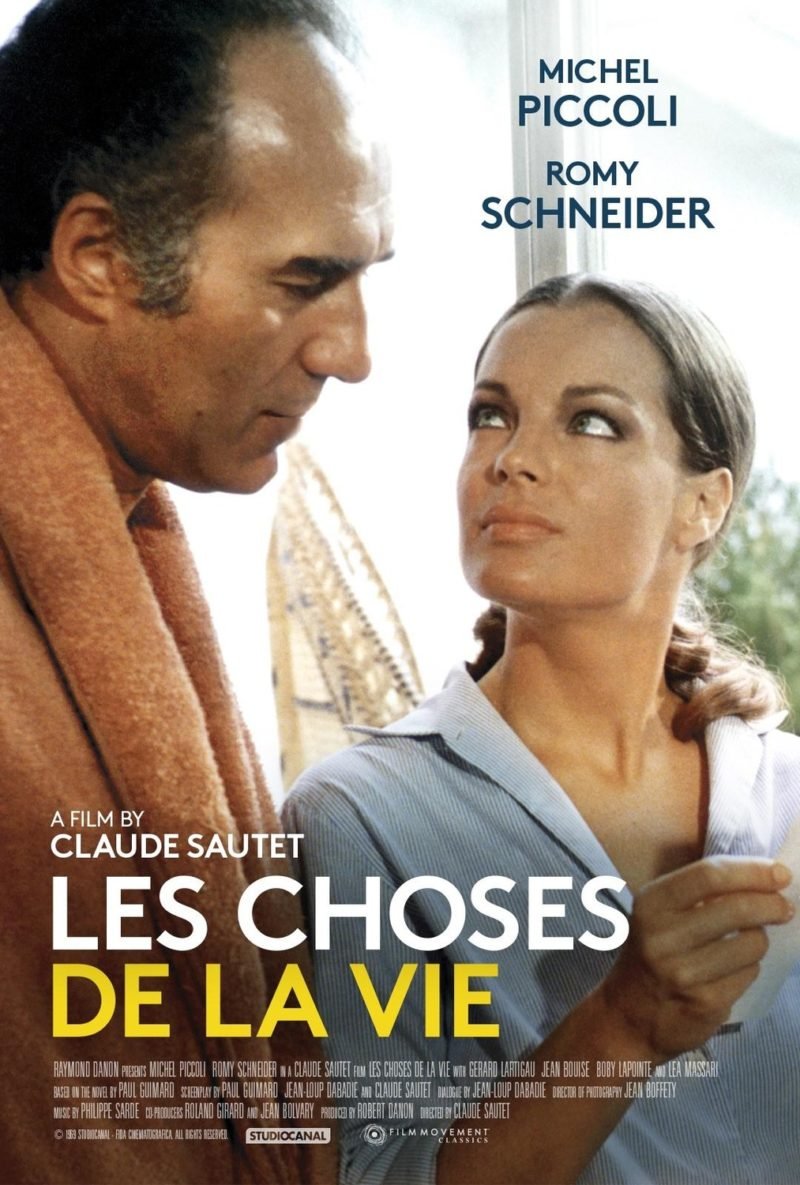
Les Choses de la vie
By Adrien Barry ·
In short: Les Choses de la vie (The Things of Life) is Claude Sautet’s 1970 drama about a man confronting the life he has lived as death approaches. This article explores the film’s melancholy, Philippe Sarde’s unforgettable score, and Sautet’s talent for finding enormous emotional weight in the smallest everyday moments.
There is something to be said about how many great films I discovered on TV. You have to give it to the French: the programming of the traditional Sunday night movie slot is impeccable.
The first time I heard about Les Choses de la vie was on France 2, just after the eight o’clock news and before the weather forecast. Back then, at the end of the news, they would show some footage of the movie selection for the night. A few images, a few seconds of music, perhaps a voice-over. I always waited for that moment, curious about what I would miss, hoping my parents would tape it for me.
I had not seen the film. I did not really know what it was about, and yet I was fascinated. There was something in those images, in the score, that immediately felt melancholic to me. The image of Romy Schneider and her tinted reading glasses stayed with me. I remember asking my parents if we could tape it. It was usually yes or no, but that night, I felt a discomfort, a hesitation, which surprised me. It was a no, I was too young.
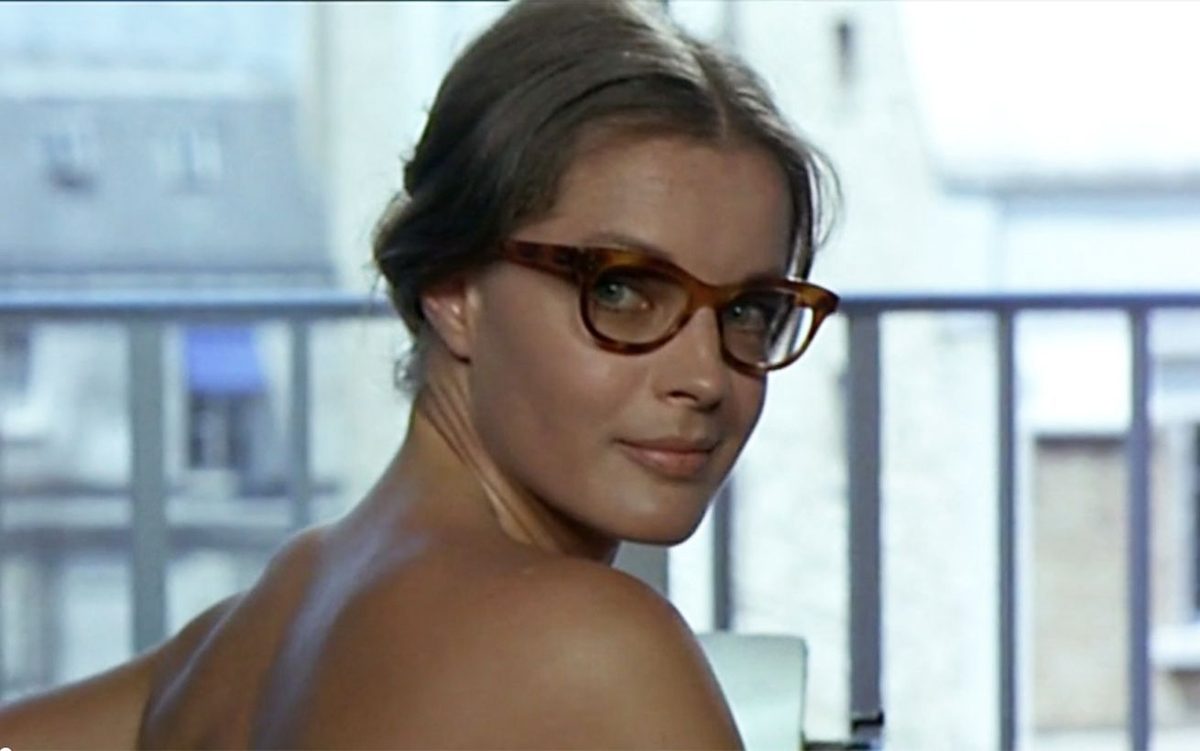
For years Les Choses de la vie was a mystery to me, something I knew from a short preview and a piece of music that had stayed with me. I had found Philippe Sarde’s score. I had not yet seen any of Claude Sautet’s movies. When I finally watched it some twenty years later, I realized why that first look had stayed with me. The music had not just made me interested in the movie; it had already shared something about it: that it was a sad story, about time, regret and things I was too young to understand as a child and wish I didn’t understand now.
A Film Built on Silences
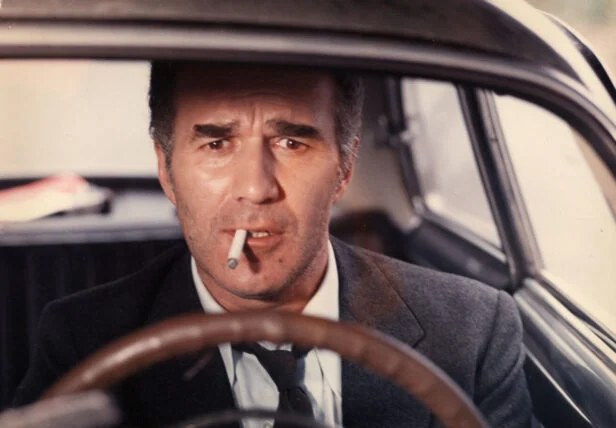
Les Choses de la vie follows Pierre, played by Michel Piccoli, an architect with a nice life, or so it seems. Pierre has a job, a beautiful wife, a son, an ex-wife that Pierre gets along fine with. Everything seems to be in order. Strangely though, Les Choses de la vie opens with a car wreck and from that moment, Pierre’s life is no longer presented as a straight line. Instead, Sautet shows us memories, fragments, hesitations of Pierre’s existence. Les Choses de la vie does not simply explain what happened to Pierre’s life. It shows Pierre’s fragilities, Pierre’s failures, his choices, his regrets. Some directors choose to show and tell; Sautet does quite the opposite. What struck me most was the restraint in his filming. Les Choses de la vie is full of conversations that were never finished, gazes held a second too long, decisions postponed, affection expressed through gestures rather than words, choices that were never made. Sautet does not tell us who Pierre is. Sautet observes Pierre. He lets Pierre’s modesty be his undoing. A pause, a missed opportunity. Les Choses de la vie is a cinema of mundane moments that conceal large disturbances.
The Cinema of “Pass Me the Salt”
Claude Sautet is often associated with what we call le cinéma du passe-moi le sel, which translates literally to “the pass-me-the-salt cinema.” As trivial as it sounds, the expression refers to his body of work built around simple domestic moments: meals, conversations, work, coffees, everyday routines, the small pieces of life shared with others.
But in Sautet’s hands, there is always more than meets the eye. A car journey can carry an entire unspoken history. A passing sentence can show that a relationship has quietly changed for the worse. On the surface, everything seems normal, even pleasant; but underneath, lives are slowly shifting, moving without our consent, in a direction we no longer control or wish for.
Les Choses de la vie was my first step towards this particular kind of cinema. His pictures taught me to notice the restraint in drama, the things people do not say or should be saying, the small everyday disappointments that become fractures.
It is, somehow, very French. I am not talking about the beret-cigarette-Eiffel Tower triumvirate that the outside world seems to think French cinema or culture is. It’s more about the failures to communicate, the unsaid things, the absence, the fear of not saying the right thing, or that the moment is gone.
Philippe Sarde’s Melancholy
Philippe Sarde’s score is the emotional memory of the film. Years before even being able to see Les Choses de la vie, I could feel its sadness through the score: it was tender, beautiful. It was not melodramatic. It was subtle in its frailty.
The score did not follow the images. Instead, it was their vessel, the recipient holding the emotions the characters cannot fully express: the regret of their choices, the misunderstandings, the confusion of their feelings, the sense that life has gone by while we were still trying to understand it.
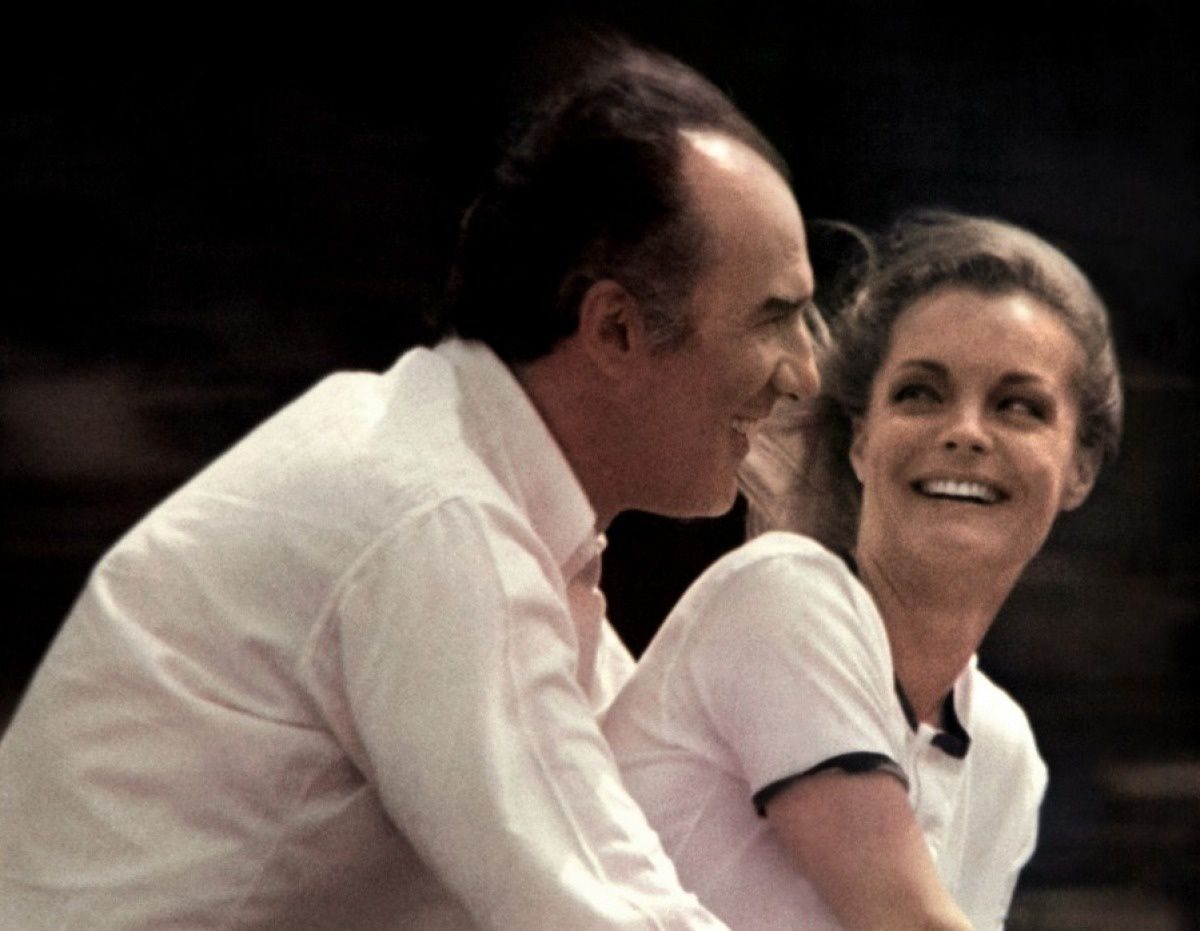
Sarde’s score is not plainly sad. It’s intimate. It shows Pierre’s story and makes it something we can relate to: the awareness that we often understand the value of things too late. Sarde composed the song interpreted by both Piccoli and Schneider called « La Chanson d’Hélène ». Sautet did not like it, as he was no longer in charge of his own story. Sarde explained to Jean-Pierre Lavoignat in his book « Romy Schneider et Claude Sautet: Un coup de foudre créatif » that Claude Sautet felt that his song was overshadowing his picture. It did manage to tell us plenty about the film: regret.
What Remains
Les Choses de la vie is a film about a man looking back at his life, trying to understand it when it’s too late, almost like a deathbed confession. It’s never conventional. Its power is in the details, in the precision of them. Sautet notices the small gestures, the held breaths, the everyday contradictions that make a person human. Michel Piccoli, Romy Schneider, Léa Massari, and the rest of the cast give the film a feeling that is not naturalism, since it shows some bourgeois living their lives, but is rooted in the reality of feelings.
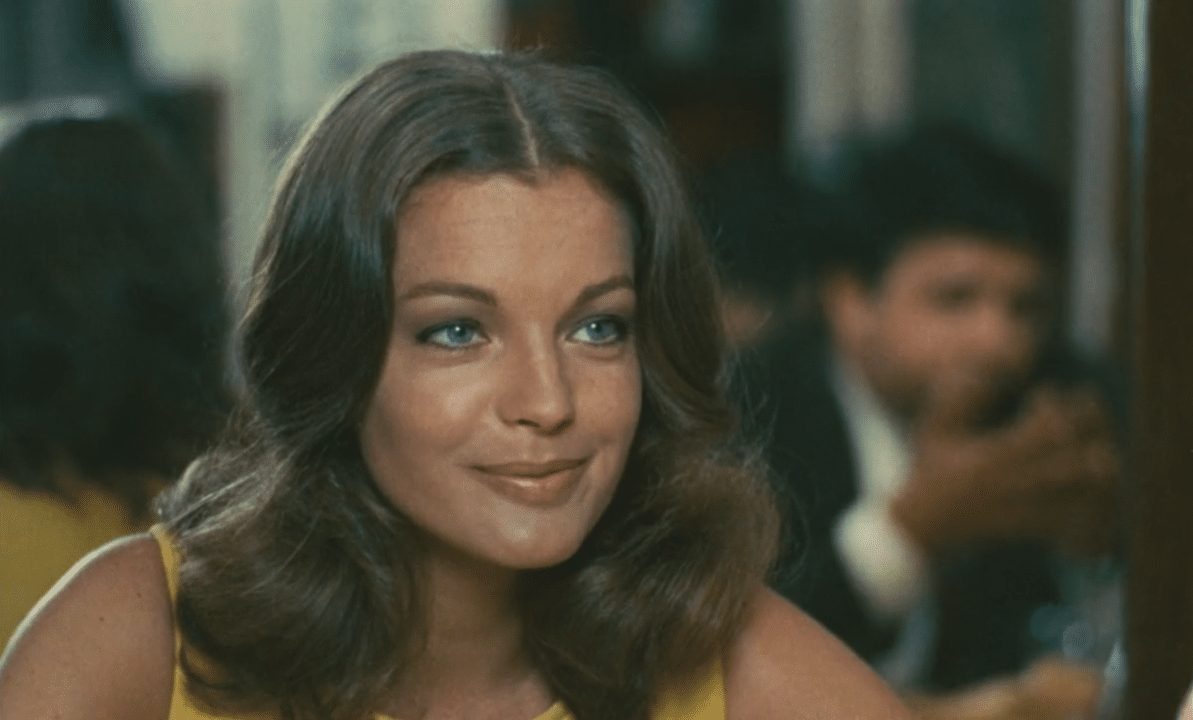
As for me, the film remains inseparable from that first television preview some thirty years ago: a few minutes seen before the weather forecast, a tune heard before bedtime, and a story that took years to hear. When I finally watched it, I did not discover a new film. I recognized a feeling.
That is the genius of Claude Sautet’s work: we remember the small details, the quietness after a sentence, a glance across a table, a piece of music heard at the right moment. Les Choses de la vie turns those small pieces into a life.
Trivia and Anecdotes
- The “Did you know?” section: Philippe Sarde was only in his early twenties when he composed the score for Les Choses de la vie. The music became so closely associated with the film that it remains one of the most recognisable pieces of French film music.
- The “I have not seen the movie but I am going to pretend to” anecdote: The film is adapted from Paul Guimard’s novel Les Choses de la vie, but Claude Sautet and Jean-Loup Dabadie reshaped much of its structure, turning it into the fragmented, memory-driven film we know today.
- The famous quote to (not) impress your friends at dinner: « Tu m’aimes parce que je suis là. Mais s’il faut traverser la rue pour me rejoindre tu es perdu. » (“You love me because I’m here. But if you have to cross the street to reach me, you’re lost.”) Hélène
Les Choses de la vie at a Glance
- Original title: Les Choses de la vie
- English title: The Things of Life
- Year: 1970
- Director: Claude Sautet
- Screenplay: Claude Sautet and Jean-Loup Dabadie, based on the novel by Paul Guimard
- Music: Philippe Sarde
- Cast: Michel Piccoli, Romy Schneider, Léa Massari, Gérard Lartigau
- Award: Prix Louis-Delluc
- Genre: French drama
Frequently asked questions
Is Les Choses de la vie a sad film?
Yes, but not in a simplistic way. Its sadness comes from restraint, memory, and the sense that life is made of moments we only fully understand too late.
What is Les Choses de la vie about?
It follows Pierre, an architect whose life is reconsidered through memories after a car accident, revealing the emotional gaps between his career, family, and love life.
Who stars in Les Choses de la vie?
Michel Piccoli plays Pierre and Romy Schneider plays Hélène. The cast also includes Léa Massari and Gérard Lartigau.
What is the English title of Les Choses de la vie?
The film is known in English as The Things of Life.
Is Les Choses de la vie based on a book?
Yes. It is adapted from Paul Guimard’s novel Les Choses de la vie (1967) by Claude Sautet and Jean-Loup Dabadie, who reshaped much of its structure into the fragmented, memory-driven film.
Why is Philippe Sarde’s music so important to the film?
Because it expresses the film’s melancholy and emotional undercurrent, often saying what the characters cannot put into words.
Who sings “La Chanson d’Hélène”?
Romy Schneider and Michel Piccoli perform the song in the film. The music is by Philippe Sarde.
What is Claude Sautet’s “pass me the salt” cinema?
It refers to his focus on ordinary domestic life, such as meals, conversations and silences, where small everyday moments reveal deeper emotional and existential tensions.